Bombshell !Jill ᴀɴɢʀɪʟʏ sʟᴀᴘs Billy when Sally reveals his ᴅᴀʀᴋ plot Young And The Restless Spoilers
In the thick atmosphere of Genoa City, where every personal decision weighs heavily on a family empire,
Sally’s quiet cry for help is the first wake-up call before a storm. She knows Billy better than most: his impulsive impulses disguised as excitement,
his “salvation” schemes disguised as ambition, and most of all, his obsession with proving to Jill that he is no longer the lost boy he once was.
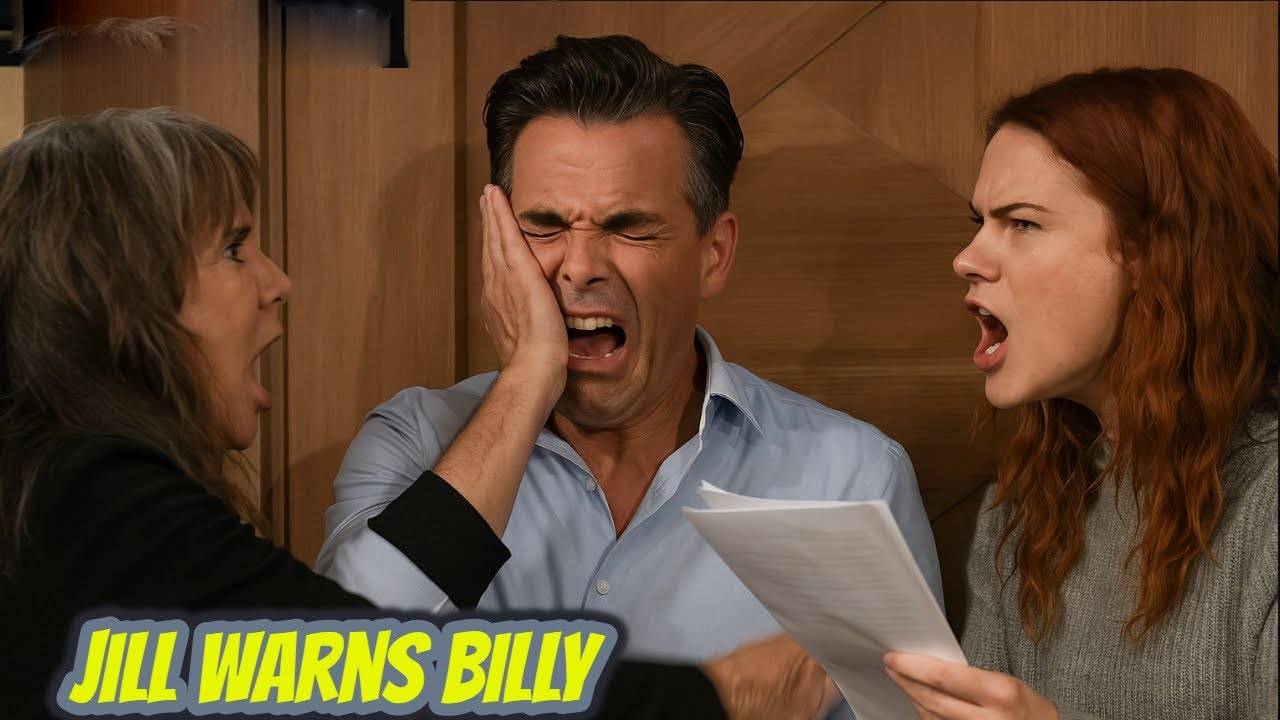
But as the signs of trouble pile up—meetings that last until dawn without justification, secret phone calls, inexplicable drafts of plans—Sally realizes she can’t pull Billy back from the edge alone.




She chooses to be direct: sending a distress signal via video call to Jill Abbott, the only woman who has been both a rock and a mirror for Billy to see himself clearly.
The call is more than just a confession that they “have a problem.” It was an honest account of a scourge called Billy’s need to “prove”—a seemingly positive need that always led him to dangerous gambles.
Sally told Jill, in a steady voice and with her eyes fixed on the screen, that Billy was plotting a “correction” course with a plan so grand that one wrong link would cause a chain reaction that would destroy relationships, careers, and reputations.
What was frightening was not the scale of the plan, but its deepest motive: Billy still wanted his mother’s approval in the loudest, quickest way, with a blow that could turn the tide in an instant.
Someone like Jill didn’t need many words; just by the look in her eyes and the slight tilt of her head, Sally knew she had hit the right spot—where the wounds of motherhood had never fully healed.
To understand the urgency of the call for help, one must look at the old cycle. Billy had promised to “forget Chancellor,” a promise that symbolized letting go of emotional debts, power, and the legacy of the past.

But letting go was easier said than done. When faced with the opportunity to demonstrate his abilities, his instincts pulled him back into the competitive game, the aggressive moves, the familiar “save others—save yourself” structures.
No one denied that Billy was smart and bold, but his boldness, if not controlled by clear goals and discipline, always turned into a reckless reflex.
Sally saw this because she had spent more hours with him, heard more of their inner monologues than anyone else, and understood that even a good plan could be a double-edged sword if it was born from the need to fill a void of recognition.