Y&R Spoilers: Lily finally has the courage to expose the secret that Cane is hiding about accident
YOUng And The Restless Spoilers reveal that Cane Ashby’s name is once again at the center of conversation. Lily has vowed to expose Cane’s schemes, as she suspects he’s behind Noah’s murder.
Not because of a spectacular contract or an image “whitewash” like he used to, but because of a promise to turn around for Lily Winters — the only woman gentle enough to call him back to the right path, yet tough enough to back him into a corner.
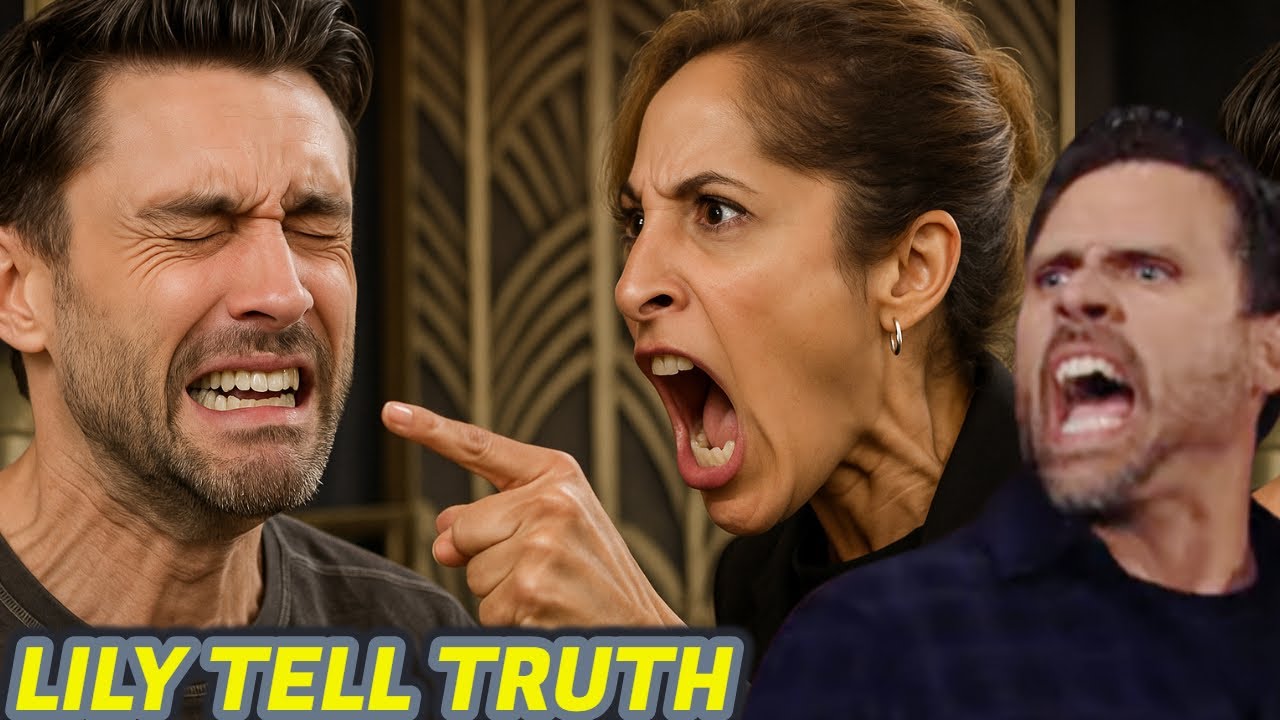
Over the past few days, Cane has felt a rift in the way people view him: polite nods instead of trust, polite smiles instead of respect, and conversations suddenly seem like they’re taking place with a stranger.
To make matters worse, he stumbled into the room while Devon Winters was badmouthing him to Abby Winters, the words breaking from the half-open door into sharp, sharp stabs, exposing the truth he had been avoiding: in Genoa City, his trust was in free fall. Cane stopped, letting the sounds hit his pride.




Where before he would have retorted or tried to turn the tide with some well-worn PR stunt, now he just took a deep breath, took it in, and was silent—the silence of someone who saw rock bottom right under his feet.
It was in that moment that Lily appeared. Without beating around the bush, she sat down opposite him, her eyes calm but uncompromising.
She knew what he was hiding; The “weaknesses” she held were not just evidence, but his moral map on paper: the AI project Cane had built was not a public service or productivity-enhancing project like a fancy presentation, but a lever of power, a machine that eroded the line between control and salvation, between personal ambition and the common good. That was why Lily spoke up, that was why she set the conditions.
And also why Cane – belatedly – said what he should have said a long time ago: “I have changed.”
Cane’s “I have changed” story was more than just a slogan. He told how the AI project was conceived from the wrong goals: to build a platform that could integrate, classify, and predict user behavior in Genoa City in real time, connecting corporate, financial, and personal data to draw impact maps.
In theory, it was a tool to optimize resources, minimize risks, and increase productivity.
In reality, it was like a web that tightened, allowing its owners to control the flow of information and public opinion, thereby directing the decisions of corporations, banks, even city councils.

Cane admitted that, in the euphoria of someone who had always been on the fringes of power, he wanted to use technology to make up for his own slip-ups: to make up for his mistakes with results, to correct his mistakes with victories, to use the “stability” imposed by AI to replace the true trust he had lost.
But then, when all eyes began to doubt, when whispers like Devon and Abby’s became the most accurate mirror of himself, Cane suddenly understood that a project built on the fear of exclusion would sooner or later turn into a machine that reproduced loneliness.
He sat before Lily no longer a sharp negotiator, but a lost man looking for a way back. He described the technical barriers he had already erected: modules that monitored data flows, backdoors hidden in the test code, digital signature keys that could reactivate control even if he left.
He didn’t make excuses; he admitted his mistakes. And then he proposed something that would surprise anyone who knew Cane back then: repurposing AI for “good,” turning it into a secure, traceable infrastructure for public health, education, and fraud prevention—where every access left a public trace, where algorithms were open to scrutiny, and accountability was built into the standard process.