Y&R Spoilers: Cane says 5 shocking words to Will before Colin exposes his crime
The Young and the Restless could be set up as a financial-family scandal, where Colin’s return not only sparks a personal crisis for Cane but also puts Genoa City on the brink of a power earthquake.
The core of the conflict is a seemingly simple question: whose money is flowing into Cane’s emerging real estate empire, and what is the true cost of that wealth?
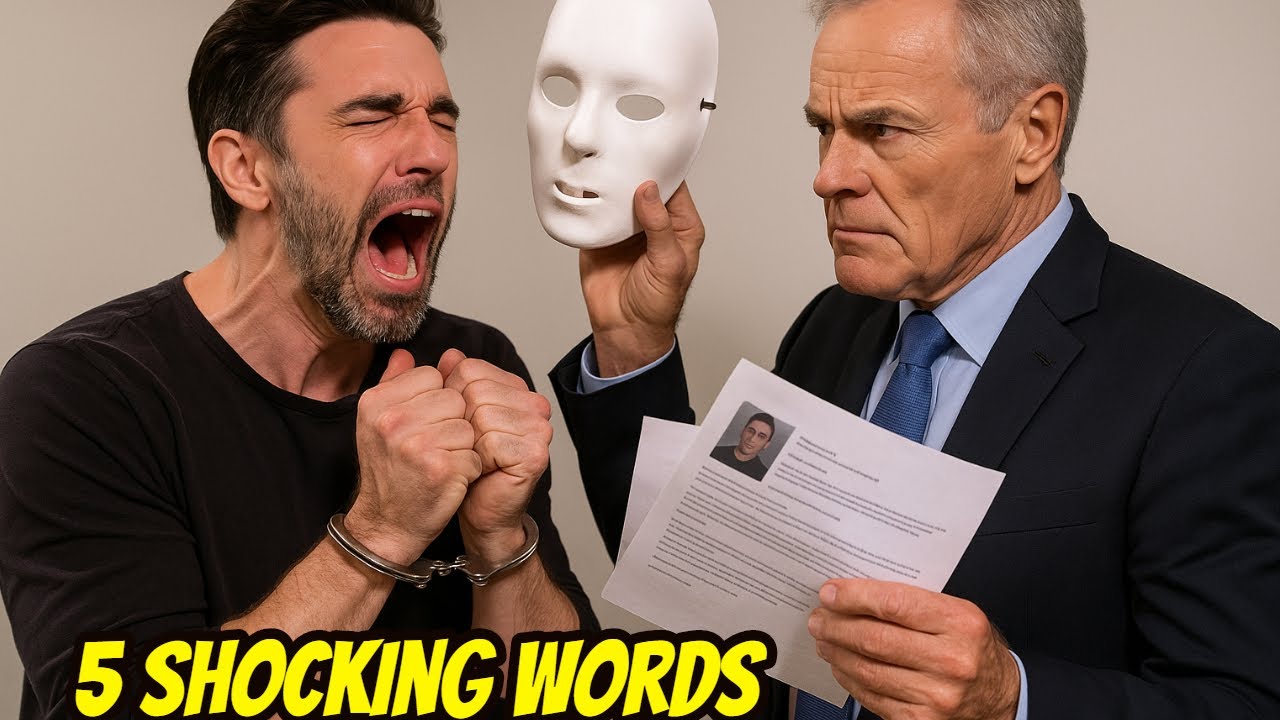
When Victor Newman comes aboard Cane’s ship with a series of “hard-to-swallow” clues, everything that was polished by ambition and smooth deals is stripped down to the core of the truth – or at least the truth Victor sees. Cane’s career is on the rise thanks to a series of large-scale real estate acquisitions in Genoa City.
From waterfront warehouses to prime commercial lots, Cane has built a portfolio that is the talk of the town. He confidently asserted that all the capital was legal, all the transactions were audited.




But Victor—with the predatory instincts of a tycoon who had seen too many “cardboard empires”—was not convinced.
He pointed to a series of disconnected but disturbingly “aligned” connections: an anonymous trust in Belize, linked to a shell company in the Cayman Islands, then suddenly appeared a bridge loan from a small private equity fund, then quickly refinanced with a tranche of private bonds.
Each link, innocuous on its own, resembled the familiar dirty money trail used by seasoned fraudsters like Colin.
Why, Victor asked, did the key cash flows for Cane’s key deal pass through compliance “blind spots”? Why did the financial partners suddenly disappear from public records after the deal closed?
And why, each time they traced the source, they found entities that had been shady in Colin’s activities for years? The next shock came from Colin himself, who had seemingly disappeared or died after his last scam. He returned, not as a surrenderer, but as a “father who wants to make things right.”

Colin claimed that he had come to protect his son, to “do the right thing,” and was willing to cooperate if necessary.
But to Victor, those words were just a new coat of paint on an old car: the smooth-tongued words of a man who made a living by twisting the truth. What Victor brought up was not an empty accusation.
He had a fragmentary transfer log that matched the timing of Cane’s deal, correspondence with an anonymous lawyer who had been involved in Colin’s previous scam, and an internal risk report prepared by a second-tier bank that warned of “possible third-party manipulation” of the project that Cane had used as collateral. T
he scattered pieces of paper are like a score without a main note, but when Victor arranges them, they form a single melody: behind Cane’s fortunes lies Colin’s dirty hand.