Traci’s warning to say 6 HURTING WORDS that ruin Cane’s plan Young And The Restless Spoilers
Young And The Restless Spoilers reveal that Traci’s return brings a new twist to the plot. Cane predicted a lot of uncertainty before Traci’s arrival.
Jack and Diane’s early morning text messages prompted her to immediately catch a flight back: Amy Lewis was drowning in grief over a recent loss and needed someone to stand by instead of a crowd of advice.
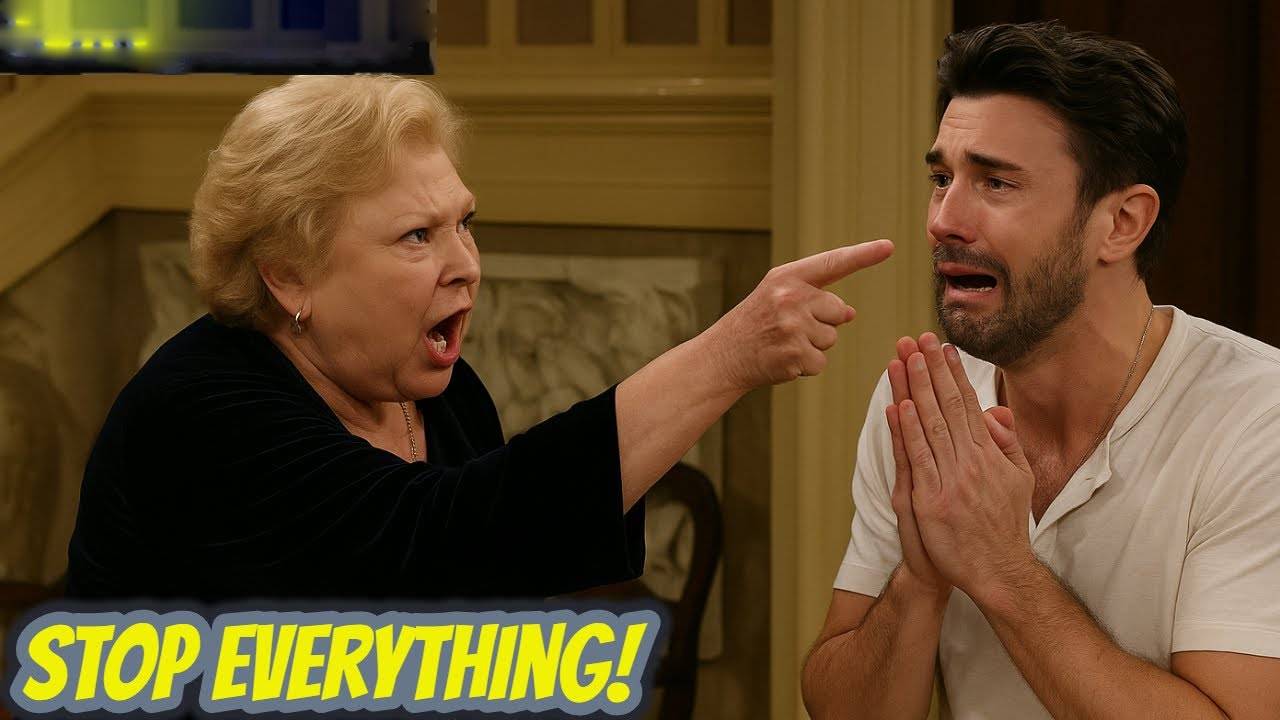
Traci knew that, for Amy, “condolences” were not as good as the presence of someone she could trust.
But as soon as she hugged Jack and Diane on the front porch, Traci sensed another turmoil in Genoa’s air: rumors of Cane Ashby’s return, the disjointed pieces surrounding a strange yet familiar name—Aristotle Dumas—and Billy’s decline like a lost ship.




Genoa is like that: an event that never travels alone. On the way to Amy’s house, Traci reviewed what she’d heard: Cane had left years ago in a tangled web of honor, affection, and accumulated mistakes.
Now, a new skin had been cast over the old man—the scheming billionaire Aristotle Dumas—whose name was a powerful brand in backroom deals, present at negotiating tables where most people saw only a signature, not a face.
Rumors said Aristotle Dumas didn’t appear in public; he preferred to operate from afar, shrouding decisions in a tangled web of legal and financial matters.
If Aristotle Dumas and Cane Ashby were the same person, Genoa was in for a real earthquake. After spending enough time with Amy to calm down and get her practical needs—rest, paperwork, and phone calls to return—Traci returned to the Abbott house, where Jack and Diane were waiting.

The conversation between the three was not a retelling of rumors, but an attempt to piece together a map of interests: What deals did Cane return to? Who was he connected to? Why was Billy slipping away at this time? Jack looked at Traci in his usual role: pacemaker.
Diane, practical and shrewd, pointed out legal loopholes if Cane—or rather, Aristotle—was quietly amassing shares in satellite units, squeezing liquidity in a few venture funds to put pressure on Jabot or its close partners. In that context, Traci calmly laid out a principle: “We don’t chase shadows. Let’s go find the source of shadows.”
With the name Aristotle Dumas haunting every call, Traci was forced to confront an old layer of memory: about six years ago, in the days when she was working on a new manuscript, a gentle friendship had blossomed between her and Cane.
There were no promises, no blurred lines, just appreciation. Cane had once inspired Traci to create a character—a man learning to redeem himself from his empty glory. When Cane wanted to go further, Traci refused. She chose to preserve that kindness in him, to put it in literature so it wouldn’t be eroded by life.
And perhaps because of that, she saw Cane differently than many people: she saw both the dark corners and the possibility of redemption.
But now, the “new version” of Cane wasn’t just a man trying to get back on his feet; it was a seasoned strategist whose veneer of power covered up all the cracks. Aristotle Dumas shook things up not by making noise, but by changing the rules of the game.