Y&R Jill shaves her head and returns to Genoa – Billy cries hysterically as his mother 𝚍𝚒𝚎𝚜 of cancer
The Young and the Restless Spoilers: Jill Abbott’s Quiet Return Shatters Billy’s World
Jill Abbott’s return to Genoa City is not marked by power plays or boardroom battles, but by something far more devastating — undeniable fragility. Gone is the indomitable force who once dominated corporate wars with razor-sharp precision.
In her place stands a woman visibly weakened, thinner, bald, and moving with measured care. When Billy Abbott and Sally Spectra see her, shock freezes them in place. This is not the mother Billy has always relied on to be unbreakable. This is a woman losing a battle no strategy can win.
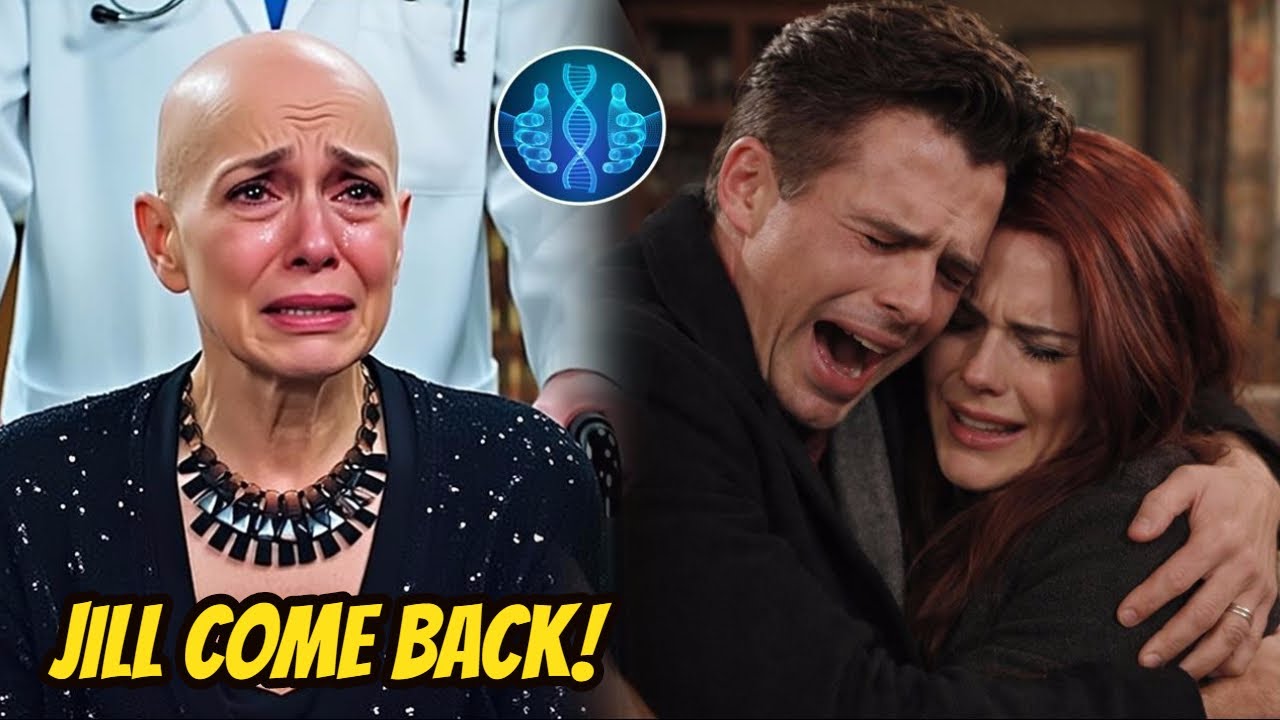
The realization hits Billy like a slow suffocation. Every missed call, every postponed visit, every moment he chose Chancellor over family crashes down on him with brutal clarity.




Jill’s exhaustion speaks louder than any diagnosis, and when she finally reveals the truth — failed treatments, limited options, and a timeline that no longer stretches into the future — denial becomes impossible. She didn’t return to reclaim power or settle scores. She came to say goodbye.
Billy is gutted. Chancellor, once the symbol of legacy and validation, suddenly represents everything he sacrificed in pursuit of success. Standing before his ailing mother, the victories feel hollow.
Sally, watching him unravel, becomes his anchor — not with empty reassurances, but with quiet strength. She reminds Billy that regret is useless if it consumes the present. What matters now is time — and how he chooses to use it.
As days pass, Jill watches from the sidelines as Billy continues to juggle impossible pressures: Jack’s expectations, Chancellor’s instability, and a relationship strained by ambition. She sees what others don’t — a man stretched to the breaking point, desperate to prove himself while quietly unraveling.
The guilt becomes unbearable, and in a rare moment of vulnerability, Jill finally confesses the full truth of her illness to Billy during a late-night encounter.
The revelation devastates him. Anger flares — not at the disease, but at the secrecy. Why did she shut him out? Jill’s answer cuts deep. She chose silence to protect him.
She feared adding another burden to a son already battling addiction scars, self-blame, and relentless pressure. Suffering alone, she believed, was an act of love.
That truth reshapes Billy. His anger dissolves into understanding. Jill didn’t shut him out — she shielded him, flawed though her choice may have been. In the aftermath, Billy changes

. The desperation fades. He stops treating every corporate disagreement as a measure of his worth. He draws boundaries, delegates, and reorders his priorities — not abandoning ambition, but no longer letting it define him.
Quietly, Billy steps into a new role: caretaker, advocate, son. He manages Jill’s appointments, sits with her through silent afternoons, and becomes a steady presence rather than a distracted one.
The guilt doesn’t vanish — it fuels him forward. Jill, freed from secrecy, feels relief for the first time. She no longer faces her illness alone.
Yet uncertainty looms. Can Billy carry the weight of Jill’s illness, Chancellor’s demands, and his fragile relationship with Sally without breaking? Jill’s confession may have anchored him — but the true test of his strength is only beginning.